Most first-aid training teaches people what to do. Far less of it teaches the harder, scarier skill: knowing whether to do something, and which thing, when a real emergency is in front of you and the wrong choice can make it worse. A well-meaning responder who moves an injured person they shouldn’t have, or who rushes in without checking the scene is safe, can turn a bad situation into a tragedy. Good first aid isn’t only about acting fast — it’s about acting correctly under pressure, and that judgment is exactly what VR safety training for first-aid is built to drill.
Why fast isn’t always right
There’s a dangerous assumption baked into a lot of emergency thinking: that any action beats no action. In first aid, that’s not always true. Some injuries are made worse by the wrong intervention. Some scenes are unsafe to enter, and a responder who rushes in becomes a second casualty. The skill that separates a helpful responder from a harmful one is the ability to pause for the right half-second — assess the scene, read the situation, and choose the correct response rather than the first one that comes to mind.
Indonesia’s Permenaker 15/2008 P3K framework puts trained responders on site precisely so that someone capable is there. But capable means more than knowing procedures — it means judgment. And judgment is the one thing a calm classroom, where the “casualty” is a cooperative mannequin and the scene is never dangerous, can’t really test.
What VR adds
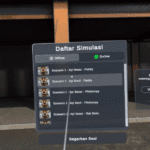
A VR first-aid scenario can present situations that demand a decision before an action — a scene that needs checking before approach, a casualty whose injury calls for one response and not another, a situation where the right move is to wait, protect, and call for help rather than intervene physically. The responder practises reading the situation and choosing correctly under pressure, not just executing a memorised step.
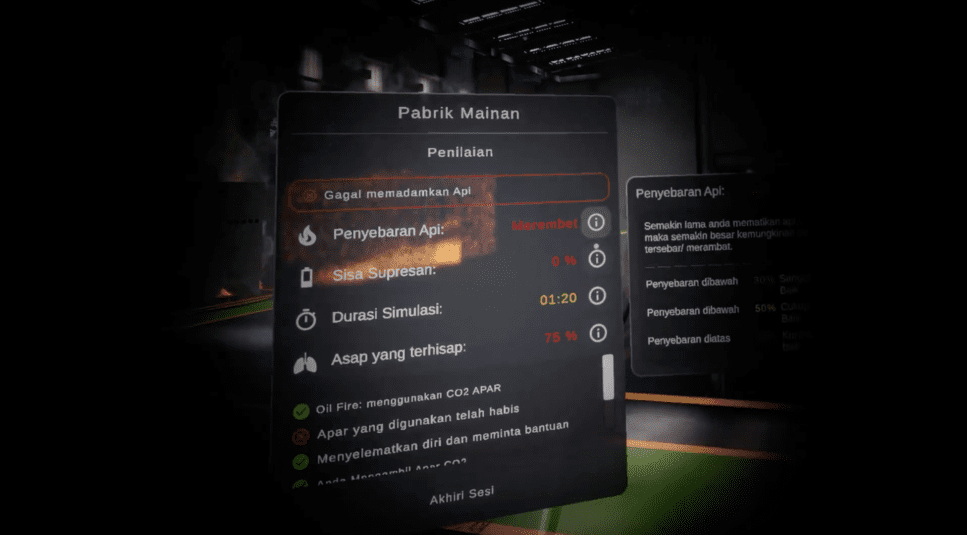
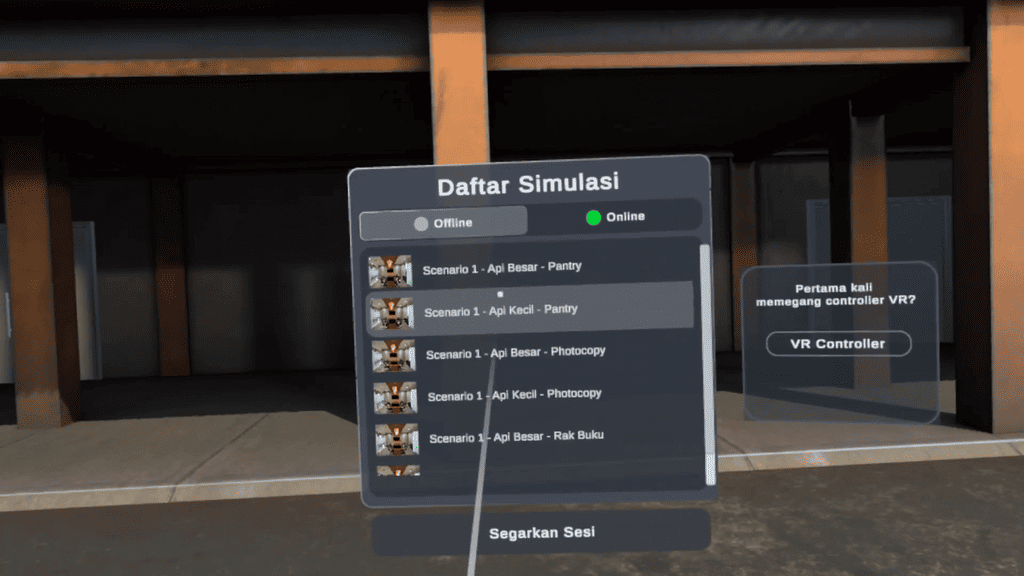
Indonesian developer VGLANT builds first-aid scenarios with the pressure and ambiguity of real emergencies, so a responder rehearses the decision-making — scene assessment, prioritisation, choosing the right response — repeatedly. A responder who has had to make these calls many times in VR develops the judgment to act correctly when it’s real, instead of reflexively doing the first thing that occurs to them.
Judgment is the skill that protects everyone
The deepest value here is harm prevention. A responder with good judgment helps the casualty and keeps themselves and others safe; a responder running on panic and half-remembered steps can add to the casualty count. Rehearsing the decision — including the discipline to check the scene first and to recognise when not to move someone — builds the kind of measured response that makes first aid genuinely helpful rather than well-intentioned but harmful. VR can train that judgment because it can stage the ambiguous, unsafe, and tricky situations a classroom never will.
The boundary
VR does not teach the physical, hands-on medical techniques — those must be learned and maintained with qualified instruction and real equipment. The headset builds scene assessment, decision-making, and composure; it doesn’t replace the tactile clinical skill or the training behind it. Both are essential, and judgment without technique is as incomplete as technique without judgment.
But it fixes a gap most first-aid training leaves wide open: the assumption that knowing the steps is enough. By drilling the decision of whether, when, and which, VR helps ensure that when a responder acts, they act correctly — and know when the right action is to hold.
In an emergency, the wrong help can hurt. VR trains the judgment to choose the right one — and the discipline to wait for the half-second that decides it.