The most dangerous seconds of a fire don’t happen in the smoke. They happen at the very start, in the gap between the alarm sounding and anyone actually moving. People hear it and pause — Is it real? Is it a drill? Should I finish this first? That hesitation, repeated across a whole building, is where escape time quietly drains away. By the time everyone accepts the fire is real, the easy window to leave has already shrunk. VR safety training for fire evacuation is built to win back exactly those first ten seconds.
The deadly first pause
Human beings are strangely reluctant to react to alarms. We look for confirmation, glance at colleagues, assume it’s a false alarm because it usually is. In a real fire, that instinct is lethal — the first minute is often the calmest and clearest one available, and most of it gets spent deciding whether to believe the alarm at all. Conventional drills make this worse, not better: because every drill is announced and non-threatening, workers are trained, in effect, to treat the alarm as a routine interruption rather than a signal to move now.
So the building learns the wrong lesson. After enough uneventful drills, the alarm means “slowly gather your things and file out,” not “leave immediately.” That conditioned slowness is invisible until the day it costs minutes nobody had.
What VR rewires
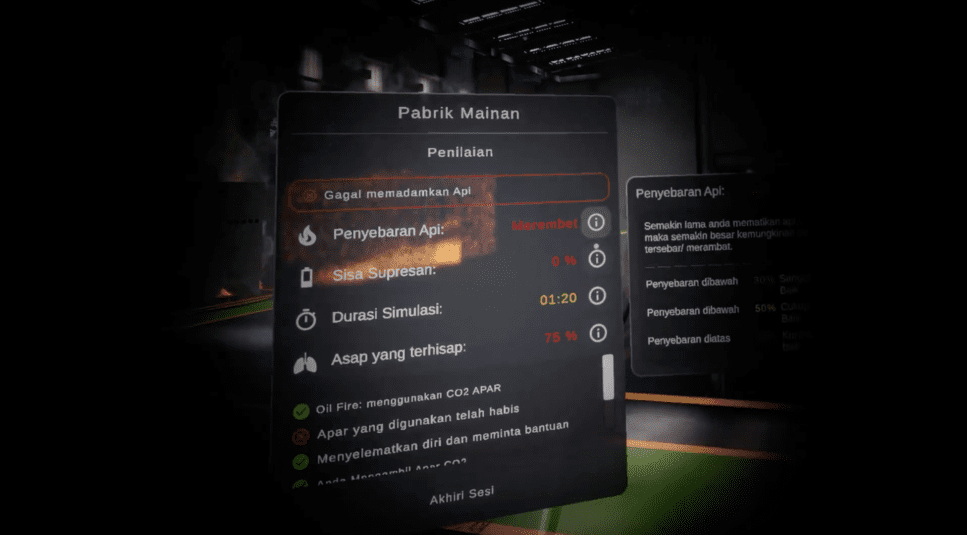
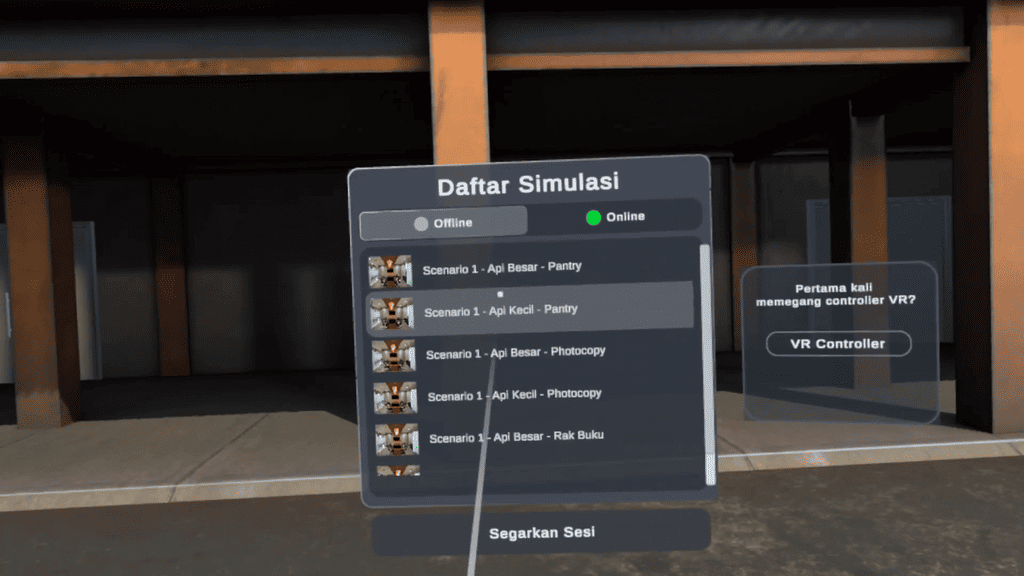
A VR fire evacuation scenario can present the alarm inside a situation that’s actually developing — smoke beginning, urgency real — so the worker rehearses reacting immediately rather than waiting for confirmation. Repeated often, this retrains the instinct: the alarm becomes a trigger to move, not a prompt to deliberate.
Indonesian developer VGLANT builds fire scenarios on realistic behaviour rather than a scripted, announced walk-out, so the worker experiences the alarm as the start of a genuine emergency. A worker who has reacted to that alarm immediately, dozens of times in VR, doesn’t lose the opening seconds to doubt — because reacting fast has become the trained default, replacing the hesitation that ordinary drills accidentally build.
Reaction is a trained reflex
The instinct to move at the first sign of danger isn’t natural — it’s built. Left untrained, people freeze and seek confirmation. Trained well, they react. VR lets a workforce practise the reaction itself, separately from the route, until moving at the alarm is automatic. That reflex is worth more than knowing the floor plan, because the best evacuation route is useless to someone who’s still standing at their desk wondering if the alarm is real.
The honest limit
VR doesn’t replace the physical drill, the real building knowledge, or the muster and headcount procedures a complete plan requires. Live drills still test the actual alarms, doors, and routes in ways a simulation can’t. VR builds the reaction speed and the composure — it complements the physical drill rather than replacing it.
But it fixes the specific weakness that ordinary drills make worse: a workforce conditioned to treat the alarm as routine. By rehearsing immediate reaction to a believable emergency, VR turns the alarm back into what it’s supposed to be — the signal to go, now.
The fire doesn’t care how well you know the exit if you spend the first minute deciding whether to use it. VR trains the part that moves first.