The Psychology of the Simulation: Why Realism Matters
In the world of professional defense and law enforcement, training is only as effective as its ability to replicate the stress of a real engagement. Traditional simulations often fall short because they lack a “consequence” for poor tactical decisions. When a trainee feels “bulletproof” in a virtual environment, they develop dangerous habits that could be fatal in the field.
KOMINA (Komando Imersif Indonesia) is changing this paradigm by introducing Haptic Realism. We believe that to truly prepare a warrior, the training must engage more than just the eyes and ears—it must engage the central nervous system.
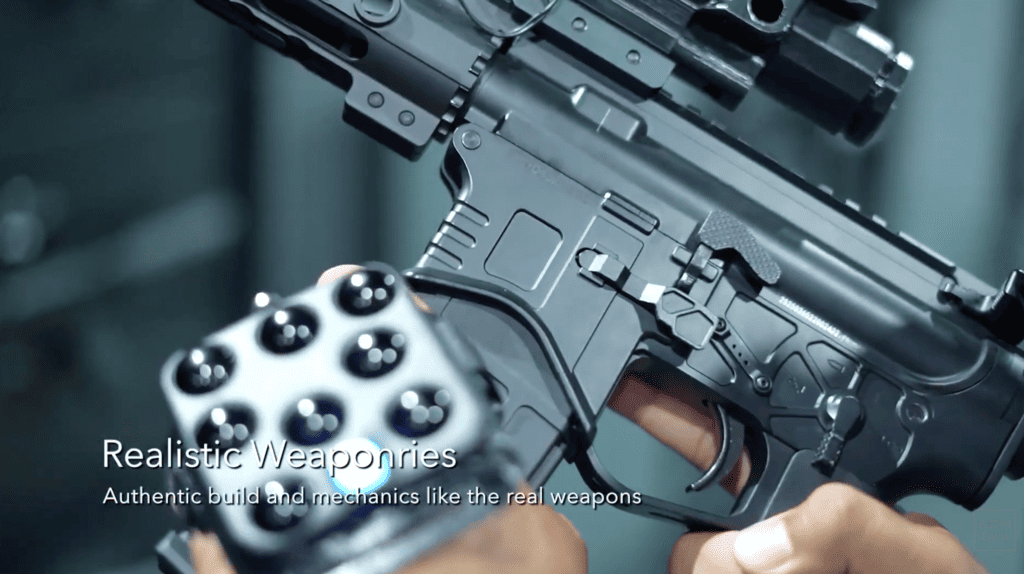
Effective tactical training requires the development of deep “muscle memory.” If a trainee uses a standard plastic VR controller, they lose the tactile familiarity of their primary service weapon.
KOMINA solves this by integrating Modified airsoft gun props. These are sophisticated training tools designed to provide:
Authentic Ergonomics: The same weight, balance, and physical grip as real-world firearms, ensuring that weapon transitions feel natural.
Recoil Simulation: A pneumatic kick that mimics the mechanical action of a rifle, forcing the operator to manage muzzle rise and re-acquire targets just as they would in a live-fire exercise.
Functional Manipulation: Features such as magazine releases and charging handles that require physical operation, ensuring that reloading becomes second nature under extreme pressure.
The “Pain-Response” Loop: Electric Shockbelt Haptics
To enforce tactical discipline and discourage “cowboy” behavior, KOMINA utilizes Electric shockbelt haptics. This is the ultimate tool for situational awareness.
When a trainee is “hit” in the simulation or fails to maintain proper cover, the shockbelt delivers a safe but sharp electrical impulse. This creates a physiological “pain-response” loop that fundamentally changes the trainee’s behavior. They learn to move with caution, respect corners, and prioritize concealment. This sensory feedback ensures that the intensity of the training matches the stakes of a real-world operation, effectively eliminating the “training scar” found in non-punitive VR systems.
The Sandbox Advantage: Any Scenario, Anywhere
Immersion is bolstered by our Sandbox scenario capabilities. Instructors can design and deploy an infinite variety of tactical situations tailored to the specific needs of their branch.
Target Identification: Practice rapid threat detection among non-combatants.
Coordinated Breaching: Synchronize team movements through complex layouts.
High-Stress Response: Test the limits of calm decision-making during active threats or hostage situations.
Because our platform is built on a Free-roam architecture, teams can physically navigate these virtual spaces together, perfecting their non-verbal communication and tactical spacing in real-time.
Real-Time Analytics for Immediate Growth
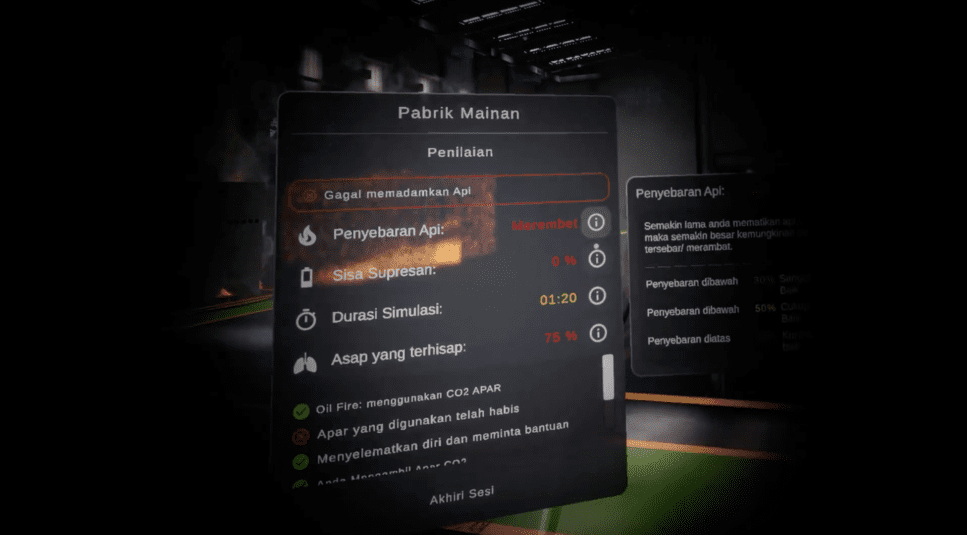
While the training is designed to be visceral, the evaluation is purely data-driven. Instructors have access to real-time performance analytics, allowing them to provide immediate, objective feedback.
Shot Accuracy: Analyze every round fired, including split-times and hit locations.
Field of View Tracking: Review exactly what the trainee was looking at during a critical engagement.
Positioning Metrics: Identify if a team member’s silhouette was exposed during a movement.
By combining the physical realism of haptics with the analytical power of VR, KOMINA ensures that your team operates as a single, lethal, and highly coordinated unit.